
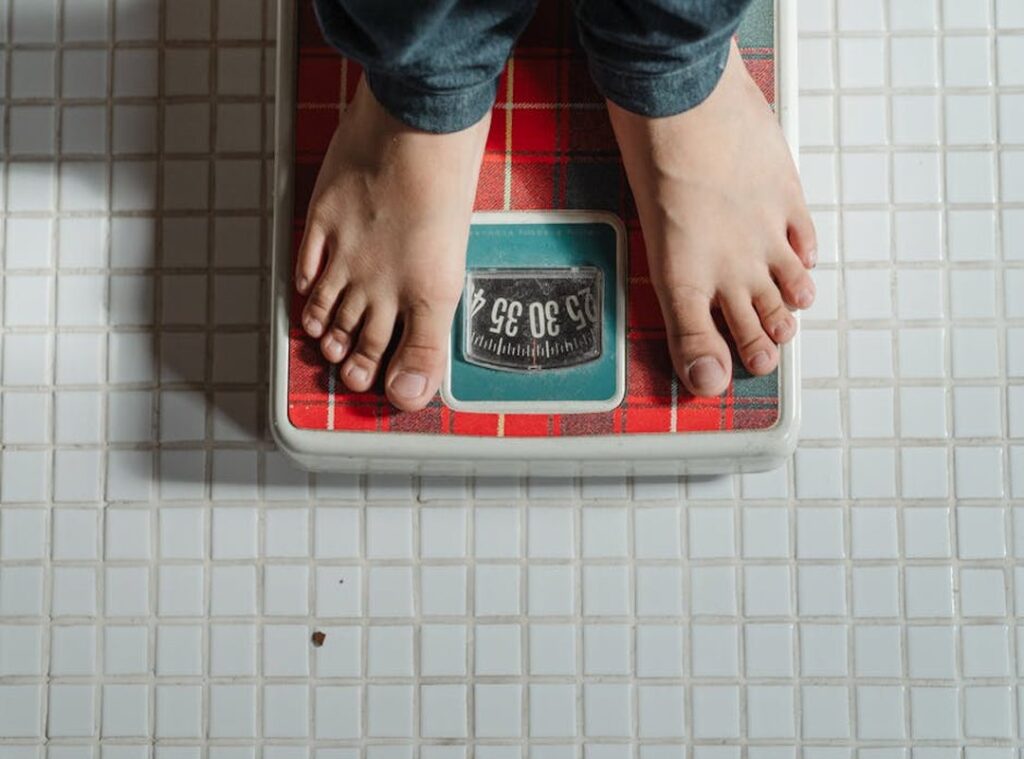
333 pounds is equal to 151.04 kilograms.
You probably need this quick, accurate conversion for something important, right? Maybe you’re planning a trip, tracking your health, or working on a school project. Whatever it is, I get it.
Understanding the ‘how’ and ‘why’ behind the conversion makes it easier next time.
I’ll give you more than just the answer. You’ll get the simple formula, some practical real-world examples, and even a handy chart for other common conversions.
By the end, you’ll be able to convert any pound value to kilograms in seconds. Trust me, it’s that straightforward.
The Step-by-Step Formula for Any Pound to Kilogram Conversion
Let’s get one thing straight: converting pounds to kilograms is a no-brainer. The universal conversion factor is 1 pound equals exactly 0.45359237 kilograms.
For most everyday purposes, using 0.4536 is more than accurate enough. No need to overcomplicate things.
Here’s the simple multiplication formula: Kilograms = Pounds × 0.453592.
So, if you have 333 pounds in kg, here’s how it breaks down:
- 333 lbs * 0.453592 = 151.04 kg
See, and easy as pie.
If you ever need to go the other way, from kilograms to pounds, just divide by 0.453592 or multiply by 2.20462. It’s like having a cheat code for conversions.
This single formula is all you need, and no fancy apps, no complex calculators. Just this one tool to solve any similar conversion problem.
From the Kitchen to the Airport: When You’ll Need This Conversion
Traveling internationally? You’ll need to know your way around kilograms. Airline baggage allowances are often listed in kilograms, like 23 kg.
If you’re not careful, you might end up paying extra for an overweight bag.
Health and fitness also come into play, and pediatricians often use kilograms for medical records. So, if you’re tracking your child’s weight, understanding this conversion is key.
Online shopping from international websites can be tricky too. Product weights and shipping costs might be listed in metric units. It’s easy to miscalculate and end up with a surprise shipping fee.
Cooking and baking get a lot more precise when you use metric. Recipes from European or other international sources list ingredient weights in grams and kilograms. Converting these measurements can make or break your dish.
Here’s a family-oriented example. If a theme park ride has a 100 kg weight limit, you’ll need to know if your family members, in pounds, can ride safely. For instance, 333 pounds in kg is about 151 kg.
That’s a big difference!
Understanding this conversion is a practical life skill in our globally connected world. Whether you’re traveling, shopping, or just trying to follow a recipe, knowing how to convert between pounds and kilograms makes a real difference.
Avoiding Common Pitfalls in Weight Conversion
Start with an anecdote about a time I was converting weights for a recipe and ended up with way too much sugar. I accidentally divided by 2.2 instead of multiplying by 0.4536. It’s a common mistake, and it can really mess up your results.
Always double-check your math. If you’re converting pounds to kilograms, the kilogram number should always be smaller. For example, 333 pounds in kg is about 151.05 kg.
If you get a larger number, you’ve probably done something wrong.
Using ‘divide by 2’ as a rough estimate can lead to significant errors, especially with larger numbers. It’s better to use the precise conversion factor (0.4536) to avoid these issues.
Rounding can also be tricky. For everyday use, rounding to one or two decimal places is usually fine. But for scientific or medical applications, more precision might be needed.
Always consider the context.
Another common confusion is between the pound (lbs) as a unit of mass and the British Pound (£) as a currency. Make sure you’re using the right unit. It’s easy to mix them up, especially if you’re new to the system.
Always double-check the units you’re starting with. Sometimes, people accidentally convert from ounces or stones instead of pounds. This can lead to even more confusion and incorrect results.
Pro tip: Write down the units and the numbers clearly. It helps to see everything at a glance and reduces the chance of mistakes.
At-a-Glance Pounds to Kilograms Chart
Sometimes, a quick reference chart can be faster than a calculator for common weights. Here’s a simple table to help you out:
| Pounds (lbs) | Kilograms (kg) |
|---|---|
| 1 | 0.4536 |
| 10 | 4.536 |
| 25 (a dumbbell) | 11.34 |
| 50 (a bag of dog food) | 22.68 |
| 100 | 45.36 |
| 150 | 68.04 |
| 200 | 90.72 |
| **333 lbs = 151.04 kg** |
This chart covers a range of values relevant to everyday life.
Bookmark this page or take a screenshot of the chart for future use. It’s handy when you need to convert pounds to kilograms quickly.
- Find the weight in pounds.
- Look up the corresponding kilograms.
- Done!
Making Sense of Metric and Imperial Weights
The key takeaway is that 333 pounds in kg equals 151.04 kg. The process is a simple multiplication, which removes any lingering intimidation about the math. This knowledge is useful in various practical scenarios, from planning family travel to tracking health metrics.
You now have the formula, the context, and a reference chart to handle any future pound-to-kilogram conversion with confidence. Next time you see a weight in pounds, try converting it in your head—you’ll be surprised how quickly it becomes second nature.

 There is a specific skill involved in explaining something clearly — one that is completely separate from actually knowing the subject. Adolphenie Reeder has both. They has spent years working with gameplay optimization hacks in a hands-on capacity, and an equal amount of time figuring out how to translate that experience into writing that people with different backgrounds can actually absorb and use.
Adolphenie tends to approach complex subjects — Gameplay Optimization Hacks, Game Industry Buzz, Competitive Hearth-Inspired Virtual Arenas being good examples — by starting with what the reader already knows, then building outward from there rather than dropping them in the deep end. It sounds like a small thing. In practice it makes a significant difference in whether someone finishes the article or abandons it halfway through. They is also good at knowing when to stop — a surprisingly underrated skill. Some writers bury useful information under so many caveats and qualifications that the point disappears. Adolphenie knows where the point is and gets there without too many detours.
The practical effect of all this is that people who read Adolphenie's work tend to come away actually capable of doing something with it. Not just vaguely informed — actually capable. For a writer working in gameplay optimization hacks, that is probably the best possible outcome, and it's the standard Adolphenie holds they's own work to.
There is a specific skill involved in explaining something clearly — one that is completely separate from actually knowing the subject. Adolphenie Reeder has both. They has spent years working with gameplay optimization hacks in a hands-on capacity, and an equal amount of time figuring out how to translate that experience into writing that people with different backgrounds can actually absorb and use.
Adolphenie tends to approach complex subjects — Gameplay Optimization Hacks, Game Industry Buzz, Competitive Hearth-Inspired Virtual Arenas being good examples — by starting with what the reader already knows, then building outward from there rather than dropping them in the deep end. It sounds like a small thing. In practice it makes a significant difference in whether someone finishes the article or abandons it halfway through. They is also good at knowing when to stop — a surprisingly underrated skill. Some writers bury useful information under so many caveats and qualifications that the point disappears. Adolphenie knows where the point is and gets there without too many detours.
The practical effect of all this is that people who read Adolphenie's work tend to come away actually capable of doing something with it. Not just vaguely informed — actually capable. For a writer working in gameplay optimization hacks, that is probably the best possible outcome, and it's the standard Adolphenie holds they's own work to.