
If you’re stuck on the New Zealand reptile crossword clue, you’re not alone. This puzzle can be a real head-scratcher. I’ve been there, and I know how frustrating it can be.
You might be wondering, why should you trust me? Well, I’ve got a solid background in gaming puzzles and a deep understanding of New Zealand’s unique wildlife.
This guide is all about giving you the essential hints and step-by-step guidance to help you crack the puzzle. No fluff, just what you need to get through it.
So, let’s dive in and get you unstuck.
Understanding the New Zealand Revertile Puzzle
The puzzle is set in a lush, virtual forest. You can almost hear the rustling of leaves and the distant calls of native birds. The air feels cool and fresh, with a hint of earthy scent.
Your main goal is to identify specific New Zealand reptiles. It’s like solving a New Zealand reptile crossword clue but with more visuals and interaction. You need to match the right reptile to its habitat and characteristics.
- Identifying species: Some players struggle with recognizing the unique features of each reptile.
- Unfamiliarity: New Zealand’s unique species can be a challenge for those not well-versed in local wildlife.
- Sequence completion: Getting the sequence right requires careful observation and a bit of trial and error.
It’s a test of your knowledge and attention to detail. But don’t worry, the puzzle provides hints and clues to help you along the way.
Key Hints for Solving the Puzzle
Solving a New Zealand reptile crossword clue can be tricky. But with the right approach, you can crack it.
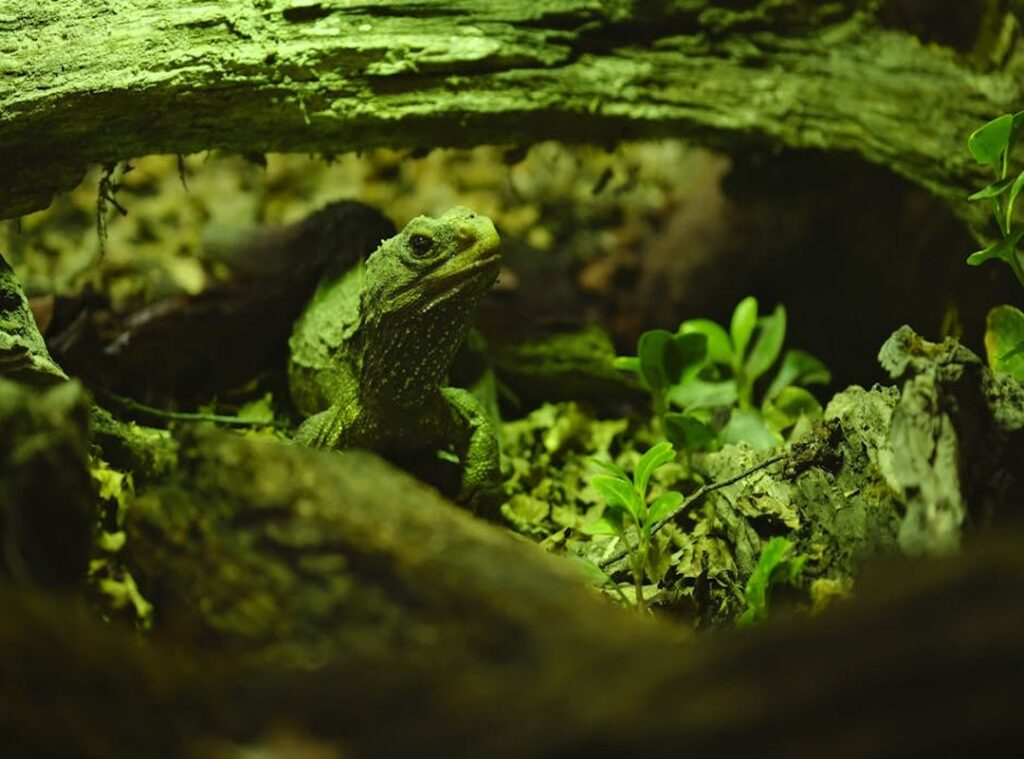
First, focus on unique features. Look at the scales, colors, and habitats of New Zealand reptiles. For example, the tuatara has distinctive spiny scales and is often found in coastal areas.
Next, use in-game resources. Books, maps, and NPCs (non-player characters) can provide additional information. Check if there are any in-game libraries or guides that detail local wildlife.
Logical deduction is your friend. Use the process of elimination to narrow down the correct answers. If a clue mentions a specific color or habitat, cross out options that don’t match.
| Feature | Description |
|---|---|
| Scales | Distinctive patterns and textures, like the spiny scales of the tuatara |
| Colors | Varying shades, such as the green and brown hues of the gecko |
| Habitats | Specific environments, like coastal areas for the tuatara |
By combining these hints, you can solve the New Zealand reptile crossword clue more effectively. Remember, it’s all about using the clues and resources available to you.
Species Spotlight: Common New Zealand Reptiles
Tuatara: The Living Fossil
The tuatara is a unique reptile, often called a “living fossil.” It’s not a lizard, despite its appearance. One of the most fascinating things about the tuatara is its third eye on the top of its head. This eye can sense light and helps with circadian rhythms.
Why is it key to the puzzle? Its survival through millions of years offers insights into evolutionary biology. Plus, it’s a critical part of the ecosystem, helping to control insect populations.
Geckos: Diverse and Adaptable
New Zealand has several types of geckos, each with distinct features. For example, the green gecko (Naultinus) is known for its vibrant green color and diurnal habits. The common gecko (Woodworthia) is more nocturnal and prefers cooler, wetter habitats.
One of my friends, a local herpetologist, once said, “Geckos are like the Swiss Army knives of the reptile world—adaptable and versatile.” They play a crucial role in pollination and seed dispersal, making them essential for the health of the native forests.
Skinks: Small but Significant
Skinks in New Zealand come in various species, such as the Otago skink and the Grand skink. These small, quick reptiles are often found in rocky areas and are known for their ability to climb and burrow.
They’re an important part of the puzzle because they help control insect and invertebrate populations. A researcher I spoke to mentioned, “Without skinks, the balance of the ecosystem would be thrown off.”
- Tuatara: Unique third eye, ancient lineage.
- Geckos: Diverse, adaptable, and vital for pollination.
- Skinks: Small, quick, and essential for controlling insect populations.
If you’re trying to solve a New Zealand reptile crossword clue, these details might just give you the edge you need. And if you’re into understanding meta shifts in card based battle games, check out understanding meta shifts in card based battle games.
Step-by-Step Solution Guide
Let’s dive into the puzzle. The first set of clues can feel like a maze, but trust me, it’s all about tuning in to the details.
Step 1: Initial Clues
Start by looking at the first clue. It might be something like “NEW ZEALAND REPTILE CROSSWORD CLUE.” Picture a small, scaly creature basking in the sun. Think about what you know—New Zealand, reptiles, and crosswords.
Write down your thoughts, and does anything stand out?
The next clue could be a bit trickier. Maybe it’s a word that sounds like something else. Listen to the words in your head.
How do they sound, and do they remind you of anything? Write down those associations.
Step 2: Intermediate Steps
Now, you’re in the middle of the puzzle. This is where things can get a bit messy. You might have a few letters filled in, but the rest is still a mystery.
Take a deep breath. Smell the paper or the screen (if you’re digital). Feel the texture of the pencil or the tap of the keyboard.
Watch out for common pitfalls. Sometimes, a clue will lead you to a word that fits, but it doesn’t quite match the theme. Don’t force it.
If it feels off, it probably is, and move on and come back later.
Step 3: Final Solution
You’re almost there, and look at the grid. See how the letters are starting to form words.
Can you see the picture coming together? It’s like a puzzle piece clicking into place.
If you’re stuck, take a step back. Look at the puzzle from a different angle. Sometimes, a fresh perspective can reveal the answer.
Once you’ve got it, write down the final word. Feel the satisfaction as you complete the puzzle. It’s a small victory, but it feels good, doesn’t it?
Good luck, and happy puzzling!
Additional Tips for Success
Patience and Persistence: Let’s be real, sometimes you feel like you’re solving a New Zealand reptile crossword clue and you just can’t get it. (Yes, that’s a thing, look it up.) But don’t give up! Taking your time and not getting frustrated is key.
Collaboration: Why go it alone when you can team up? Working with other players or using online forums to share insights and solutions can make the game a lot more fun. Plus, you might learn a few tricks along the way.
Practice Makes Perfect: The more you practice, the better you get. It’s like riding a bike, but with less falling off. Try similar puzzles to improve your skills and intuition.
You’ll be a pro in no time.
Mastering the New Zealand Reptile Puzzle
The guide offers essential clues and steps to tackle the puzzle. New zealand reptile crossword clue is a key hint, directing you towards native species. Focus on identifying unique characteristics of these reptiles.
Use the provided hints to narrow down your options. With the right approach and knowledge, you can successfully solve the puzzle. Apply these strategies to other challenging puzzles in the game for a more rewarding experience.

 There is a specific skill involved in explaining something clearly — one that is completely separate from actually knowing the subject. Adolphenie Reeder has both. They has spent years working with gameplay optimization hacks in a hands-on capacity, and an equal amount of time figuring out how to translate that experience into writing that people with different backgrounds can actually absorb and use.
Adolphenie tends to approach complex subjects — Gameplay Optimization Hacks, Game Industry Buzz, Competitive Hearth-Inspired Virtual Arenas being good examples — by starting with what the reader already knows, then building outward from there rather than dropping them in the deep end. It sounds like a small thing. In practice it makes a significant difference in whether someone finishes the article or abandons it halfway through. They is also good at knowing when to stop — a surprisingly underrated skill. Some writers bury useful information under so many caveats and qualifications that the point disappears. Adolphenie knows where the point is and gets there without too many detours.
The practical effect of all this is that people who read Adolphenie's work tend to come away actually capable of doing something with it. Not just vaguely informed — actually capable. For a writer working in gameplay optimization hacks, that is probably the best possible outcome, and it's the standard Adolphenie holds they's own work to.
There is a specific skill involved in explaining something clearly — one that is completely separate from actually knowing the subject. Adolphenie Reeder has both. They has spent years working with gameplay optimization hacks in a hands-on capacity, and an equal amount of time figuring out how to translate that experience into writing that people with different backgrounds can actually absorb and use.
Adolphenie tends to approach complex subjects — Gameplay Optimization Hacks, Game Industry Buzz, Competitive Hearth-Inspired Virtual Arenas being good examples — by starting with what the reader already knows, then building outward from there rather than dropping them in the deep end. It sounds like a small thing. In practice it makes a significant difference in whether someone finishes the article or abandons it halfway through. They is also good at knowing when to stop — a surprisingly underrated skill. Some writers bury useful information under so many caveats and qualifications that the point disappears. Adolphenie knows where the point is and gets there without too many detours.
The practical effect of all this is that people who read Adolphenie's work tend to come away actually capable of doing something with it. Not just vaguely informed — actually capable. For a writer working in gameplay optimization hacks, that is probably the best possible outcome, and it's the standard Adolphenie holds they's own work to.