
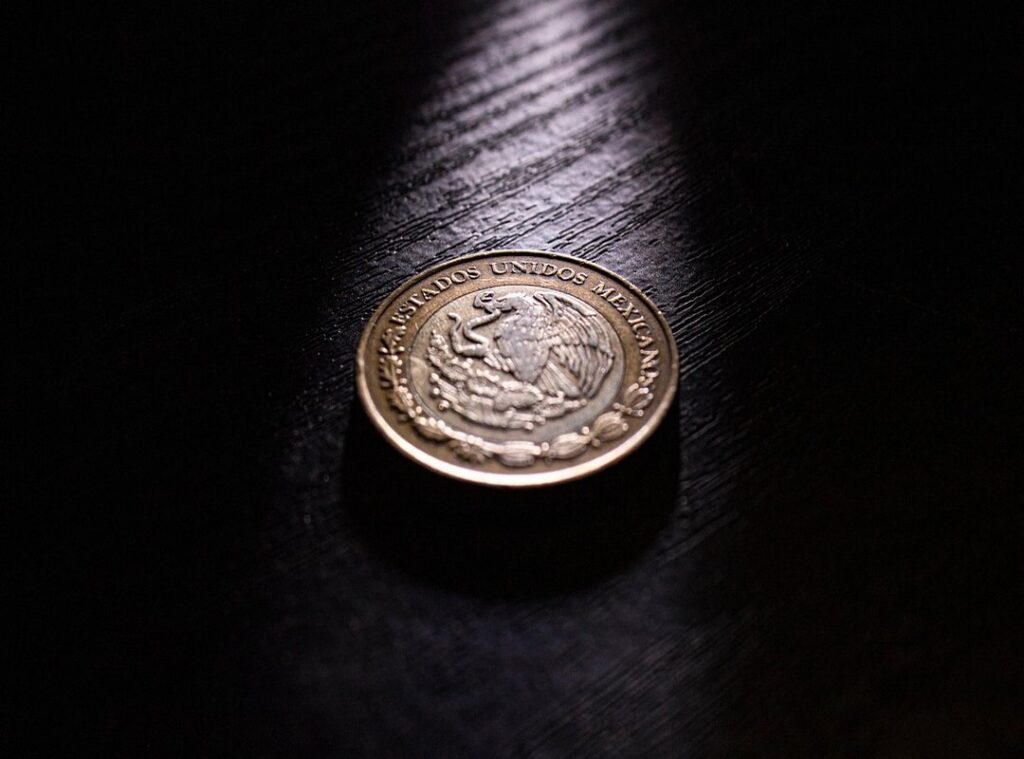
I get it, exchange rates can be confusing. But they don’t have to be. Let’s break it down.
An exchange rate is just the price of one country’s currency in terms of another. Simple, right?
Currency codes help a lot. MXN stands for Mexican Peso and CLP for Chilean Peso. Using these codes avoids mix-ups.
Trust me, you don’t want to get those wrong.
So, what does the current MXN/CLP exchange rate mean? If the rate is 1 MXN = 55 CLP, it means one Mexican Peso can buy 55 Chilean Pesos. That’s a lot of pesos, isn’t it?
But here’s the thing: when you go to a currency exchange, they have two different rates. The ‘buy rate’ is what they pay you for your pesos, and the ‘sell rate’ is what they charge you to buy their pesos. They make money on the difference.
It’s how they stay in business.
Now, let’s talk about strong and weak pesos. A higher CLP number per MXN means the Mexican Peso is stronger relative to the Chilean Peso. Got it?
Good.
If you’re wondering about 500 pesos mexicanos a pesos chilenos, that’s exactly what we’ll dive into next.
Key Factors That Make the Exchange Rate Fluctuate
Economic health is a big deal when it comes to exchange rates. Inflation and interest rates in both Mexico and Chile play a crucial role. High inflation in one country can weaken its currency, making it less attractive to investors.
Interest rates also matter. Higher rates can attract foreign investment, boosting the currency. But if inflation is too high, it can negate those gains.
Political stability and major government policy changes can shake things up. If there’s a sudden shift in leadership or policy, it can spook investors. This lack of confidence can lead to a weaker currency.
Trade between Mexico and Chile is another factor. Strong demand for Mexican goods in Chile can increase the demand for MXN, strengthening its value against the CLP. 500 pesos mexicanos a pesos chilenos can fluctuate based on this demand.
Commodity prices are a big deal too. Copper is a major export for Chile, and oil is a big deal for Mexico. When these commodity prices rise, it can boost the respective economies and strengthen their currencies.
Global market sentiment can’t be ignored. Events like a global recession can cause investors to move money to ‘safe-haven’ currencies. This can affect the value of both pesos, as investors might pull out of emerging markets.
Understanding these factors can help you make better decisions. It’s not just about following the news; it’s about seeing the bigger picture and how all these elements interplay. this guide
How to Convert 500 MXN to CLP: Best and Worst Methods
Converting 500 pesos mexicanos a pesos chilenos can be a bit tricky. You want the best deal, right? Let’s break it down.
Banks
Banks are secure, no doubt. But they often have poor exchange rates and high fees. It’s like paying extra for peace of mind.
Is it worth it? Not always.
Online Money Transfer Services
Online services, like Wise and Remitly, offer better rates and lower fees. They require some setup, but it’s usually just a one-time thing. The benefits?
More money in your pocket.
Physical Currency Exchange Booths
Exchange booths are super convenient, especially at airports. But here’s the catch: they have the worst rates. It’s like throwing money away.
Avoid them if you can.
Step-by-Step Guide: Using an Online Money Transfer Service
- Choose a service. Pick a reputable one like Wise or Remitly.
- Sign up. Create an account if you don’t already have one.
- Enter details. Input the amount (500 MXN) and the recipient’s information.
- Review. Check the exchange rate and any fees.
- Confirm. Make sure everything looks good, then hit send.
Why Final Amount Matters
Always look at the final amount the recipient will get. This includes both the exchange rate and any hidden fees. It’s the true test of value.
Practical Example
Let’s say you convert 500 MXN through three different services:
- Bank: Poor rate, high fees. Recipient gets less.
- Online Service: Better rate, low fees. Recipient gets more.
- Exchange Booth: Worst rate, highest fees. Recipient gets the least.
See the difference? It’s all about the final amount.
Common Mistakes to Avoid When Exchanging Currency
Exchanging money at airports or tourist-heavy locations is a big no-no. They offer the worst rates because they know you’re a captive audience.
Dynamic Currency Conversion (DCC) is another trap. An overseas ATM or card machine might ask if you want to be charged in your home currency, like 500 pesos mexicanos a pesos chilenos, instead of the local one. Always choose the local currency (CLP) to get a better rate from your bank.
Watch out for “zero commission” or “no fee” claims. The fee is almost always hidden in a poor exchange rate. It’s just a sneaky way to make more money off you.
Carrying large amounts of physical cash is risky. Use a combination of a low-fee debit/credit card and smaller cash exchanges for safety and value.
Check the mid-market rate on a reliable source, like Google or XE.com, right before making a transaction. This way, you’ll know if you’re getting a fair deal.
Your Next Steps
When converting 500 pesos mexicanos a pesos chilenos, it’s important to use the current exchange rate. This ensures accuracy in your financial calculations.

 There is a specific skill involved in explaining something clearly — one that is completely separate from actually knowing the subject. Terry Rubyanaleron has both. They has spent years working with gameplay optimization hacks in a hands-on capacity, and an equal amount of time figuring out how to translate that experience into writing that people with different backgrounds can actually absorb and use.
Terry tends to approach complex subjects — Gameplay Optimization Hacks, Competitive Hearth-Inspired Virtual Arenas, Insider Knowledge being good examples — by starting with what the reader already knows, then building outward from there rather than dropping them in the deep end. It sounds like a small thing. In practice it makes a significant difference in whether someone finishes the article or abandons it halfway through. They is also good at knowing when to stop — a surprisingly underrated skill. Some writers bury useful information under so many caveats and qualifications that the point disappears. Terry knows where the point is and gets there without too many detours.
The practical effect of all this is that people who read Terry's work tend to come away actually capable of doing something with it. Not just vaguely informed — actually capable. For a writer working in gameplay optimization hacks, that is probably the best possible outcome, and it's the standard Terry holds they's own work to.
There is a specific skill involved in explaining something clearly — one that is completely separate from actually knowing the subject. Terry Rubyanaleron has both. They has spent years working with gameplay optimization hacks in a hands-on capacity, and an equal amount of time figuring out how to translate that experience into writing that people with different backgrounds can actually absorb and use.
Terry tends to approach complex subjects — Gameplay Optimization Hacks, Competitive Hearth-Inspired Virtual Arenas, Insider Knowledge being good examples — by starting with what the reader already knows, then building outward from there rather than dropping them in the deep end. It sounds like a small thing. In practice it makes a significant difference in whether someone finishes the article or abandons it halfway through. They is also good at knowing when to stop — a surprisingly underrated skill. Some writers bury useful information under so many caveats and qualifications that the point disappears. Terry knows where the point is and gets there without too many detours.
The practical effect of all this is that people who read Terry's work tend to come away actually capable of doing something with it. Not just vaguely informed — actually capable. For a writer working in gameplay optimization hacks, that is probably the best possible outcome, and it's the standard Terry holds they's own work to.