
If you’re searching for a clear path to winning more matches, refining your mechanics, and outsmarting tougher opponents, you’re in the right place. This competitive gaming strategy guide is built for players who want more than basic tips — it’s designed to help you understand the tactical depth behind high-level play and apply it in real matches.
Competitive environments evolve fast. Meta shifts, balance updates, and new team compositions can leave even skilled players struggling to keep up. That’s why this guide breaks down proven tactics, gameplay optimization methods, and multiplayer coordination strategies that actually translate into results.
Our insights are grounded in ongoing analysis of competitive matches, emerging playstyles, and performance patterns across top-tier arenas. We study what works at higher levels and distill it into practical steps you can implement immediately.
By the end of this guide, you’ll have a clearer strategic framework, sharper decision-making tools, and a stronger edge in any competitive setting.
Feeling stuck at a skill plateau in competitive gaming is brutal. You grind matches, yet your rank barely moves. Most players choose Option A: play more, assuming volume fixes everything. Others try Option B: structured improvement. This competitive gaming strategy guide argues B wins.
Here’s the framework:
- Mindset: Treat losses as data, not drama.
- Mechanical Skill: Practice specific inputs, not whole matches.
- Strategic Thinking: Study win conditions versus reacting.
- Review Process: Analyze replays to spot patterns.
Improvement isn’t luck; it’s applied science. Follow the formula consistently, and contender status becomes predictable, not accidental. Every day counts.
Mastering the Mental Game: Your Foundation for Victory
As you craft your winning strategy in competitive games, it’s essential to consider how mastering the nuances of live service games can shape your long-term approach and enhance your overall gaming experience – for more details, check out our Understanding Live Service Games and Their Long-Term Impact.
Mechanical skill matters, but mindset wins championships. The growth mindset—a term coined by psychologist Carol Dweck (Stanford University)—means believing your abilities can improve through effort. In gaming terms, it’s the difference between blaming lag or “bad teammates” and asking, “What could I have done better?” After every loss, review one mistake and one strength. (Yes, even in that 0–13 stomp.) That’s how pros turn frustration into fuel.
Emotional regulation—your ability to manage reactions under stress—is just as critical. Tilt (emotional frustration that hurts performance) is real and measurable in esports psychology research (APA, 2020). Try this between matches:
- Take 5 slow breaths, in for 4 seconds, out for 6
- Stand up and reset your posture
- Name the trigger: “I overpeek when I’m impatient”
Short breaks prevent spiral losses (pro tip: stop after two tilted games, not five).
Finally, set SMART goals—Specific, Measurable, Achievable, Relevant, Time-bound. Instead of “aim better,” try: “Increase headshot accuracy by 5% this week.” Track stats daily. Adjust weekly. Repeat.
Think of this as your personal competitive gaming strategy guide: small, controlled upgrades that compound over time. (Rocky didn’t win in one montage.)
Building Elite Muscle Memory: The Art of Deliberate Practice
Great mechanics aren’t magic—they’re trained. Muscle memory is your brain’s ability to automate repeated actions so they fire without conscious thought. In gaming terms, it’s why a pro lands a flick shot before you’ve finished blinking (and why you sometimes reload instead of melee in a panic).
Isolating Core Mechanics
Complex skills should be broken into parts. In FPS titles, aim trainers isolate tracking, flicking, and recoil control. Fighting game players drill specific combos until inputs are airtight. MOBA competitors run last-hitting drills to perfect gold timing under pressure.
This isolation matters because you’re reducing “cognitive load” (the total mental effort used at once). Fewer variables = cleaner reps. Some argue you should “just play more matches” since real games teach adaptability. True—but without targeted drills, you’re reinforcing bad habits at full speed. That’s like practicing free throws while blindfolded and hoping for the best.
Perfect practice beats random grinding every time.
Structuring a Training Routine
A balanced routine prevents burnout:
- 20 minutes: mechanical drills (aim trainer, combo reps, last-hitting)
- 30–60 minutes: focused ranked or scrims
- 15 minutes: review mistakes and key clips
Pro tip: End sessions on a successful rep to reinforce correct execution.
For strategic depth, study concepts like pattern recognition in this guide: how to analyze opponent patterns and improve your win rate.
The Concept of “Perfect Practice”
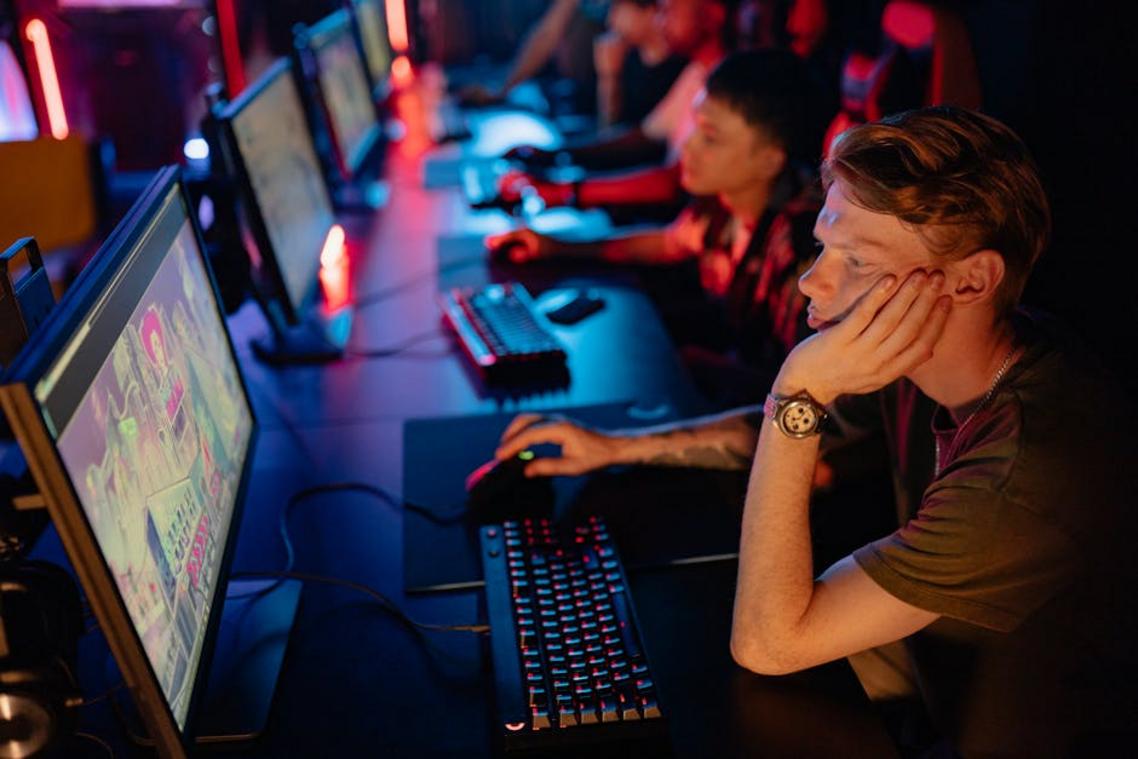
Mindless repetition builds sloppy habits. Deliberate practice means entering each session with one objective—improve crosshair placement, tighten punish timing, or refine wave control.
Think of it as your personal competitive gaming strategy guide in action. Every rep should answer one question: What exactly am I improving right now?
Because spamming games for six hours isn’t dedication. It’s cardio for your ego.
Thinking Two Moves Ahead: Developing Superior Game Intelligence
Mechanical skill is flashy. Game intelligence wins matches. When you think two moves ahead, you stop reacting and start controlling outcomes (and that’s when ranked ladders feel a lot less cruel).
The Power of VOD Review
First, record your gameplay. Then rewatch it with one goal: diagnose decisions, not mistakes. Look for positioning errors (were you exposed without cover?), missed opportunities (could you have rotated sooner?), and your decision-making process in key fights. Pause and ask, What information did I have? What did I assume? Over time, patterns emerge. The benefit? You replace guesswork with awareness—and awareness compounds fast. Pro tip: review losses first. They’re uncomfortable, but they’re gold mines.
Learning from the Pros
Next, watch professionals analytically, not passively. Focus on positioning during engagements, rotation timing, and resource management. Why did they disengage there? Why hold that angle? This transforms streams into a competitive gaming strategy guide tailored to your game. Some argue copying pros doesn’t work at lower ranks. True—skill gaps exist. However, principles like spacing, timing, and patience apply at every level.
Understanding the Meta
Game patches shift balance constantly. The “meta” (most effective tactics available) shapes weapon, character, and strategy viability. Staying current helps you anticipate opponent behavior and draft smarter plans. According to multiple esports patch analyses, win rates can swing dramatically after updates (e.g., League of Legends patch impact reports). Knowing this gives you predictive power.
Effective Communication
Finally, communicate clearly and objectively. Use concise callouts and focus on goals, not blame. Teams that share actionable info win more consistently (Harvard Business Review research on team communication effectiveness). In short, better intel equals better results.
Fine-Tuning Your Setup for Peak Performance
First, hardware matters more than most players admit. A 144Hz or 240Hz monitor reduces motion blur and can improve reaction time (NVIDIA notes higher refresh rates improve target tracking). I’m convinced it’s the closest thing to legal superpowers. Next, dial in your mouse sensitivity using eDPI—effective dots per inch, calculated by multiplying DPI by in-game sensitivity—so your aim feels consistent. Meanwhile, prioritize an ergonomic chair and desk to limit fatigue.
In-game, lower flashy graphics for FPS and reduced input lag. Visibility wins fights. As competitive gaming strategy guide should stress, smooth performance beats pixels.
Improvement follows a simple loop: Mindset -> Deliberate Practice -> Strategic Application -> Review. First, adopt a growth mindset—the belief skills are built, not born (Dweck, 2006). Then engage in deliberate practice, defined as focused, feedback-driven repetition; studies show it drives elite performance (Ericsson et al., 1993). Next, apply skills strategically in matches. Finally, review results through VOD analysis to identify gaps.
Importantly, plateaus are normal. Performance research shows progress often stalls before breakthroughs. Therefore, use this framework to push through.
Now, choose one tactic from this competitive gaming strategy guide and commit for one week. Track results and adjust.
Dominate Your Next Match with Confidence
You came here looking for clarity, smarter tactics, and a real edge in today’s high-stakes matches — and now you have the blueprint to elevate your play. From sharper decision-making to optimized loadouts and tighter team coordination, you’re equipped with the tools that turn average sessions into competitive breakthroughs.
The difference between climbing the ranks and staying stuck often comes down to strategy gaps, missed rotations, and inconsistent execution. That frustration of losing winnable games or falling short in clutch moments? It doesn’t have to define your grind anymore.
This competitive gaming strategy guide gives you the structure to refine mechanics, read opponents faster, and adapt under pressure — exactly what serious players need to stay ahead in evolving virtual arenas.
Now it’s time to act. Put these tactics into practice in your next matches, review your gameplay critically, and commit to sharpening one core skill each session. Thousands of competitive players rely on our expert-backed insights to level up faster and win smarter.
Stop leaving victories on the table. Start applying these strategies today and turn every match into a calculated step toward the top of the leaderboard.

 Jorval Kelvayne has opinions about multiplayer experience reviews. Informed ones, backed by real experience — but opinions nonetheless, and they doesn't try to disguise them as neutral observation. They thinks a lot of what gets written about Multiplayer Experience Reviews, Game Industry Buzz, Insider Knowledge is either too cautious to be useful or too confident to be credible, and they's work tends to sit deliberately in the space between those two failure modes.
Reading Jorval's pieces, you get the sense of someone who has thought about this stuff seriously and arrived at actual conclusions — not just collected a range of perspectives and declined to pick one. That can be uncomfortable when they lands on something you disagree with. It's also why the writing is worth engaging with. Jorval isn't interested in telling people what they want to hear. They is interested in telling them what they actually thinks, with enough reasoning behind it that you can push back if you want to. That kind of intellectual honesty is rarer than it should be.
What Jorval is best at is the moment when a familiar topic reveals something unexpected — when the conventional wisdom turns out to be slightly off, or when a small shift in framing changes everything. They finds those moments consistently, which is why they's work tends to generate real discussion rather than just passive agreement.
Jorval Kelvayne has opinions about multiplayer experience reviews. Informed ones, backed by real experience — but opinions nonetheless, and they doesn't try to disguise them as neutral observation. They thinks a lot of what gets written about Multiplayer Experience Reviews, Game Industry Buzz, Insider Knowledge is either too cautious to be useful or too confident to be credible, and they's work tends to sit deliberately in the space between those two failure modes.
Reading Jorval's pieces, you get the sense of someone who has thought about this stuff seriously and arrived at actual conclusions — not just collected a range of perspectives and declined to pick one. That can be uncomfortable when they lands on something you disagree with. It's also why the writing is worth engaging with. Jorval isn't interested in telling people what they want to hear. They is interested in telling them what they actually thinks, with enough reasoning behind it that you can push back if you want to. That kind of intellectual honesty is rarer than it should be.
What Jorval is best at is the moment when a familiar topic reveals something unexpected — when the conventional wisdom turns out to be slightly off, or when a small shift in framing changes everything. They finds those moments consistently, which is why they's work tends to generate real discussion rather than just passive agreement.