

Why do some titles become nightly rituals while others vanish weeks after launch? The difference isn’t luck—it’s design. In this breakdown, we dissect the psychological triggers and structural systems that turn a simple multiplayer experience into a lasting obsession. Many games surge on release day hype, only to watch their player base evaporate. Others build communities that thrive for years. The gap comes down to understanding core multiplayer game engagement factors—from reward loops and competitive balance to social friction and progression pacing. Drawing on thousands of hours of competitive play and close analysis of top-performing titles, this article delivers a clear, actionable framework for developers and dedicated players alike.
The Social Fabric: Connection and Community
Shared goals turn strangers into squads. When players coordinate raids or team-based missions, they create mutual reliance—a dynamic where each member’s success depends on the others. Think of it like assembling the Avengers: Iron Man can’t save the world alone (no matter how good the suit is). Cooperative objectives build trust, shared language, and inside jokes that last longer than the loot itself.
Building a Home Base
Guilds, clans, and free companies function as persistent social anchors. They’re not just chat channels; they’re digital neighborhoods. Members invest time, resources, and identity into these groups, creating long-term commitment to the game’s ecosystem. Studies on online communities show that belonging increases retention and satisfaction (Ducheneaut et al., 2007). In other words, when players feel at home, they stay.
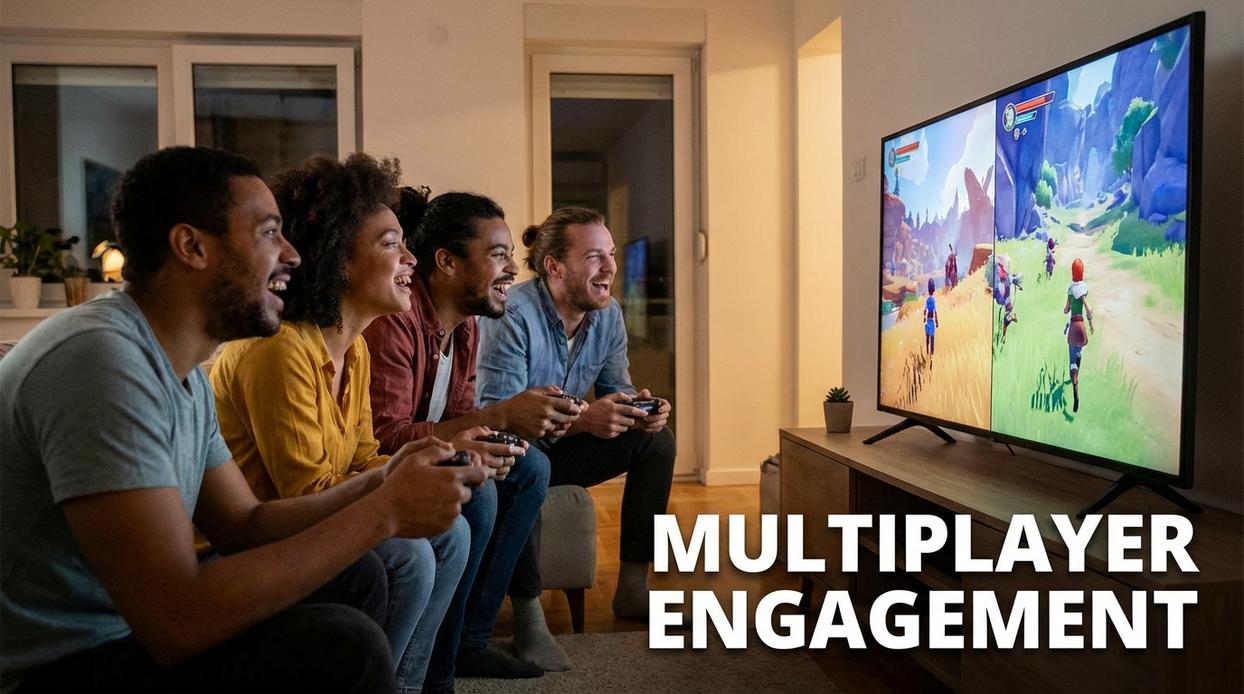
Fostering organic interaction is where design truly shines. Social hubs, proximity voice chat, and expressive emote systems encourage spontaneous moments—the virtual equivalent of running into friends at a coffee shop. (Yes, sometimes it’s chaotic. That’s part of the charm.) These features are powerful multiplayer game engagement factors because they lower barriers to conversation and collaboration.
Some argue solo modes are enough. But without community, even the best mechanics can feel like grinding alone in a montage from Rocky. Connection turns gameplay into culture.
Mastery and Progression: The Drive to Improve
The Infinite Skill Ladder
A high skill ceiling—the theoretical upper limit of player performance—keeps games alive long after launch. Titles that are easy to learn but difficult to master create what designers call an “infinite skill ladder.” You grasp the basics in an hour, yet spend years refining mechanics, timing, and strategy. Think of competitive shooters where recoil control and map awareness separate casual players from tournament finalists.
Some argue steep mastery curves scare newcomers away. That’s fair. But when onboarding is smooth and depth unfolds gradually, players stay because improvement feels earned (like finally landing that impossible combo you swore was broken). This balance is one of the core multiplayer game engagement factors driving retention.
Tangible Growth and Recognition
Progression systems work best when they make improvement visible and meaningful:
- Skill trees that unlock new playstyles, not just stat bumps
- Gear optimization systems rewarding experimentation
- Cosmetic trophies signaling dedication and rank
A rare armor skin or elite badge isn’t just decoration—it’s social proof. In competitive arenas, visible rewards communicate mastery instantly. While some critics dismiss cosmetics as superficial, visible milestones motivate sustained effort and community respect.
Reinforcing Success with Feedback
Clear, immediate feedback loops accelerate growth. Distinct headshot audio cues, crisp hit markers, responsive controller vibration, and transparent ranking systems all answer one question: Did I do that right?
When feedback is precise, players iterate faster. Improvement becomes measurable, not abstract. Pro tip: games that show performance breakdowns (accuracy percentages, damage charts) often foster deeper long-term engagement because players can target weaknesses directly.
Mastery thrives where progress is felt, seen, and heard.
The Core Loop: Why “Fun” is a Science
Have you ever wondered why some games feel instantly satisfying while others feel clunky, even if they look stunning? The answer often starts with kinesthetic satisfaction, better known as game feel—the tactile response you get from responsive controls, punchy animations, and tight feedback loops. When jumping, shooting, or dodging feels precise, your brain registers mastery (think of the snap of a perfect headshot in Valorant). That tight, repeatable core loop—the main actions players perform again and again—drives retention.
But skill alone isn’t enough. Do you ever blame “broken matchmaking” after a loss? The perception of fairness matters. Regular balance patches and skill-based matchmaking (SBMM) systems aim to ensure your decisions—not random chaos—determine outcomes. Critics argue SBMM makes matches sweaty and exhausting. Fair point. Yet without it, newcomers get steamrolled, and communities shrink. Fair competition sustains multiplayer game engagement factors over time.
Then comes strategic depth. Procedural generation, diverse map pools, multiple modes, and varied character kits keep matches unpredictable. Would you still play if every round unfolded the same way? Probably not. Variety forces adaptation—and that evolution keeps the core loop alive.
For more insight, explore top features that define a great online co op experience.
I still remember logging in “just to check the shop” and losing three hours to a surprise winter event (so much for an early night). That’s the magic of live services. At their core, they create a calendar of excitement—a structured rollout of seasonal content, battle passes, and rotating cosmetics that reward consistency. In other words, players return not out of habit, but anticipation.
However, critics argue this model exploits FOMO—fear of missing out—and turns games into chores. I get that. I’ve felt that pressure myself. Yet when done right, it enhances multiplayer game engagement factors by aligning rewards with meaningful play rather than grind.
Consider three pillars:
- Limited-time events that evolve the world’s lore.
- Transparent roadmaps that clarify what’s next.
- Detailed patch notes explaining every tweak.
As a result, players feel like participants in living history, not just consumers (think Fortnite’s live concerts). Pro tip: communication cadence often matters more than content volume.
One key element that makes a multiplayer game truly engaging is its ability to foster a sense of community among players, much like the innovative gaming experiences we explore at Pboxcomputers.
Engineering Engagement for the Long Haul
You set out to understand what truly keeps players coming back—and now it’s clear that lasting engagement isn’t luck. It’s intentional design built on strong social systems, meaningful progression, and a rewarding core loop. The real pain point isn’t attracting players; it’s keeping them invested once the novelty fades. Games that endure treat engagement as evolving architecture, not a one-time feature. Mastering multiplayer game engagement factors is what separates short-lived hits from thriving communities.
If you’re ready to stop losing players to churn, start designing with these pillars in mind today. Join thousands of developers and competitive players who rely on proven engagement insights—explore more strategies now and build experiences that last.

 There is a specific skill involved in explaining something clearly — one that is completely separate from actually knowing the subject. Terry Rubyanaleron has both. They has spent years working with gameplay optimization hacks in a hands-on capacity, and an equal amount of time figuring out how to translate that experience into writing that people with different backgrounds can actually absorb and use.
Terry tends to approach complex subjects — Gameplay Optimization Hacks, Competitive Hearth-Inspired Virtual Arenas, Insider Knowledge being good examples — by starting with what the reader already knows, then building outward from there rather than dropping them in the deep end. It sounds like a small thing. In practice it makes a significant difference in whether someone finishes the article or abandons it halfway through. They is also good at knowing when to stop — a surprisingly underrated skill. Some writers bury useful information under so many caveats and qualifications that the point disappears. Terry knows where the point is and gets there without too many detours.
The practical effect of all this is that people who read Terry's work tend to come away actually capable of doing something with it. Not just vaguely informed — actually capable. For a writer working in gameplay optimization hacks, that is probably the best possible outcome, and it's the standard Terry holds they's own work to.
There is a specific skill involved in explaining something clearly — one that is completely separate from actually knowing the subject. Terry Rubyanaleron has both. They has spent years working with gameplay optimization hacks in a hands-on capacity, and an equal amount of time figuring out how to translate that experience into writing that people with different backgrounds can actually absorb and use.
Terry tends to approach complex subjects — Gameplay Optimization Hacks, Competitive Hearth-Inspired Virtual Arenas, Insider Knowledge being good examples — by starting with what the reader already knows, then building outward from there rather than dropping them in the deep end. It sounds like a small thing. In practice it makes a significant difference in whether someone finishes the article or abandons it halfway through. They is also good at knowing when to stop — a surprisingly underrated skill. Some writers bury useful information under so many caveats and qualifications that the point disappears. Terry knows where the point is and gets there without too many detours.
The practical effect of all this is that people who read Terry's work tend to come away actually capable of doing something with it. Not just vaguely informed — actually capable. For a writer working in gameplay optimization hacks, that is probably the best possible outcome, and it's the standard Terry holds they's own work to.