
If you’re looking to sharpen your edge in competitive gaming, you’re in the right place. Whether you’re climbing ranked ladders, refining team strategies, or trying to outplay tougher opponents, success often comes down to smarter choices and sharper execution. This article is built to help you strengthen your in-game decision making skills, optimize your gameplay, and stay ahead of evolving multiplayer metas.
We break down proven tactics, performance optimization techniques, and emerging competitive trends so you can translate knowledge into real wins. Our insights are grounded in hands-on gameplay analysis, close observation of high-level competitive arenas, and continuous tracking of industry developments that shape how games are played today.
By the end, you’ll have practical strategies you can apply immediately—whether that means improving positioning, coordinating better with teammates, or adapting faster under pressure. Let’s level up your approach and turn smart play into consistent results.
The Rank Plateau You Can Feel
You hear the click of your mouse, the hum of your PC, the sharp ping of an incoming threat. Your screen flashes red, palms slick, heart hammering. You blame your APM. But raw speed isn’t the only culprit. Many players grind mechanics while ignoring strategy, like sprinting on a treadmill that goes nowhere. True progress comes from sharpening in-game decision making skills—reading the minimap, predicting rotations, setting traps before fight starts. Slow down. Review replays. Ask why each loss smelled like panic instead of planning. That’s how reactive chaos becomes victory consistently with calm, deliberate intent every match.
- Track patterns.
Strategic play and tactical play often get lumped together, yet they operate on different horizons. A strategy is your long game: choosing to win through economic dominance, map control, or scaling composition. Tactics, by contrast, are the immediate maneuvers—outplaying a 1v1 fight or landing the perfect skill combo. Both matter; however, confusing them is like mistaking a single chess move for the entire match. I firmly believe most players plateau because they obsess over tactics while ignoring strategy.
To process both layers, I lean on the OODA Loop—Observe, Orient, Decide, Act—a military decision model developed by U.S. Air Force Colonel John Boyd (U.S. Air Force doctrine archives). First, you gather information. Next, you interpret it within context. Then you choose a response and execute. The player who cycles this loop faster gains tempo (think Sherlock scanning a crime scene before anyone else blinks).
Macro vs. Micro awareness builds on this. Macro is high-level awareness: objectives, rotations, economy, win conditions. Micro is mechanical execution in the moment. True strategic players flow between them, zooming out to assess the map, then snapping back to land precise inputs. Use in-game decision making skills to consciously shift between these states.
Ultimately, every action is economic. Mana, ammo, cooldowns, gold—these are finite resources. Spend recklessly and you forfeit pressure. Invest wisely and you compound advantages. Some argue mechanics alone carry games; I disagree. Mechanics win moments. Resource management wins wars. And in competitive arenas, that distinction separates contenders from champions consistently. Every match becomes clearer.
From Theory to Execution: Actionable Drills to Sharpen Your Mind
Talent wins rounds. Training wins tournaments. The difference? Intentional practice.
The Analyst’s Playbook: VOD Review with Intent
A VOD (Video on Demand) review is recorded gameplay you analyze after a match. Most players rewatch clips to cringe at missed shots. That’s surface-level.
Instead, follow this step-by-step drill:
- Pause before every major fight or rotation.
- Ask: What information did I have here? (minimap pings, sound cues, enemy positions).
- Identify at least two other viable options.
- Explain why you chose your action.
For example, if you pushed mid after spotting two enemies top, was that based on confirmed vision—or assumption? That distinction matters. Pro tip: write down repeated mistakes. Patterns reveal more than isolated blunders.
Some argue VOD reviews are overkill for casual players. But even NBA athletes review tape (yes, even the superstars). Why wouldn’t you?
The Chess Master’s Gambit: Proactive Scenario Planning
Scenario planning means rehearsing responses before chaos hits. Think in “if-then” statements:
- If the enemy jungler invades early, then I rotate with priority.
- If we lose first objective, then we trade vision control elsewhere.
During downtime, mentally simulate three likely enemy plays. This strengthens in-game decision making skills by reducing hesitation. Studies in cognitive psychology show mental rehearsal activates similar neural pathways as physical practice (Driskell et al., 1994).
Critics say over-planning makes you rigid. True—if you cling to the script. The goal isn’t prediction. It’s preparedness.
For a broader framework, explore beginner to pro building a winning strategy in competitive games.
The Intelligence Officer’s Briefing: Mastering Information Triage
Information triage means sorting critical data from noise—like an ER doctor prioritizing patients.
Focus on:
- Minimap movement
- Kill feed updates
- Enemy cooldown usage
Ignore flashy skins and visual clutter (they’re cosmetic, not tactical).
Train this deliberately: spend one match tracking only minimap data. You’ll be surprised how much you’ve been missing.
Execution beats theory. Every time.
Adapting Your Strategic Framework Across Gaming Genres
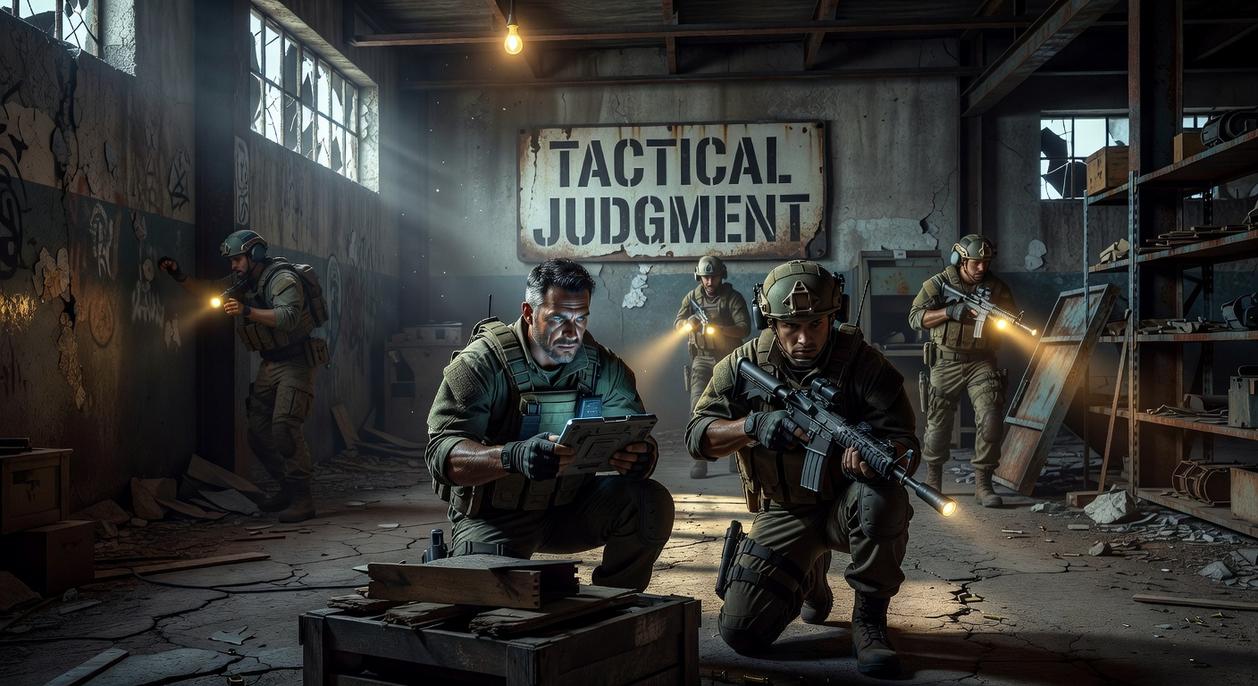
Back in 2019, when tactical shooters surged on Twitch, many players learned the hard way that raw aim fades, but strategy scales. Different genres demand distinct frameworks, yet the core principle remains: informed choices over impulsive plays. In short, Use in-game decision making skills that transfer across titles.
-
FPS (Valorant, CS:GO)
Tactical shooters reward preparation before precision. Utility usage (smokes, flashes, mollies) shapes the battlefield by denying vision or forcing movement. Positional advantage means holding angles that maximize cover while minimizing exposure. Meanwhile, team economy—the shared management of in-game currency—dictates when to buy rifles or save for future rounds. Some argue FPS is “just mechanics.” Yet tournaments since 2020 consistently show coordinated executes outperform solo fragging (Riot Games Esports Reports). Winning begins before the first bullet lands. -
MOBA (League of Legends, Dota 2)
Here, tempo defines victory. Objective control (dragons, Roshan) creates map-wide leverage. Vision wars revolve around ward placement and denial, turning information into power. A power spike is a temporary strength surge after key items or levels. Winning lane is tactical; winning the map is strategic (and yes, your 10/0 mid can still throw). -
Battle Royale (Apex Legends, Fortnite)
Since Apex’s 2019 launch, rotation timing has separated contenders from spectators. Smart pathing avoids—or initiates—third parties (teams attacking ongoing fights). End-game positioning, especially high ground, remains decisive under shrinking zones. Pro tip: rotate early when 10 squads remain; chaos compounds late-game risks.
Integrating Strategic Practice into Your Daily Gaming
Most players grind matches hoping volume alone creates progress. That’s option A: more hours, same habits. Option B is intentional practice—short, focused blocks aimed at one weakness like map awareness or cooldown tracking. When you isolate a skill, you give your brain a clear target (think training montage, not endless respawns).
Every click, rotation, or ability cast reflects in-game decision making skills. Treat those moments as conscious choices rather than autopilot reactions. A reactive player drifts with the lobby; a deliberate player asks, “Why this move, right now?” That shift turns chaos into data you can refine.
Your next move: pick one drill, such as reviewing a single loss before queuing again. Compare guessing why you died versus pausing and labeling the mistake. One path protects ego. The other builds mastery. Pro tip: write down one adjustment and test it immediately today consistently.
Level Up Your Competitive Edge
You came here looking for sharper strategies, smarter plays, and a clearer path to dominating your favorite competitive arenas. Now you have the insights to refine your approach, strengthen your in-game decision making skills, and stay ahead of evolving multiplayer metas.
The real frustration isn’t losing — it’s knowing you could have played better. Missed rotations, inefficient builds, poor team coordination — those small mistakes add up fast. Mastering tactics and optimizing gameplay isn’t optional if you want consistent wins.
The advantage goes to players who study the game, adapt quickly, and execute with precision. Apply these strategies, analyze your recent matches, and start making intentional improvements every session.
If you’re serious about climbing ranks and outperforming the competition, don’t leave your growth to chance. Join thousands of competitive players who rely on our expert-backed insights to sharpen their edge. Dive deeper, stay updated on the latest strategies, and start winning smarter today.