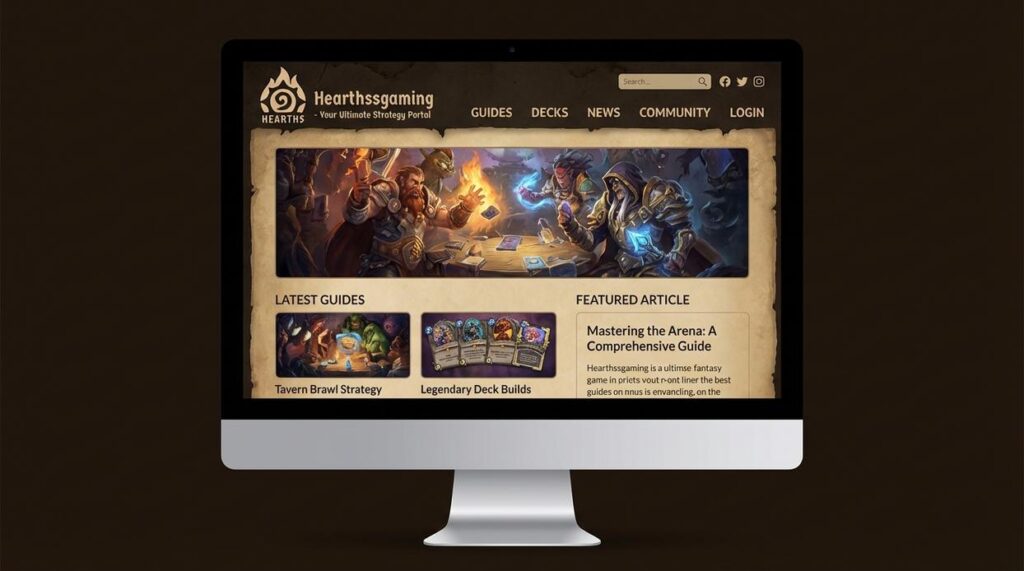
I’ve spent thousands of hours analyzing what separates players who climb the ladder from those who stay stuck at the same rank.
You’re probably here because your wins feel random. Like you’re flipping coins instead of making strategic decisions. That stops today.
Here’s the truth: most players blame bad draws when the real problem is their approach to the game. They don’t understand the fundamentals that drive consistent wins.
I built this gaming guide online hearthssgaming by breaking down what actually works at high levels of competitive play. Not theory. Real patterns from matches that matter.
This guide covers everything you need to move from hoping for good RNG to controlling your games. You’ll learn how to build stronger decks, make better plays, and understand why certain decisions win matches.
We’ve analyzed winning strategies across thousands of competitive games. That’s how I know what I’m teaching here actually translates to rank gains.
You’ll get a clear framework that takes you from basic principles to advanced tactics. No fluff about luck or waiting for the right cards.
Just the strategic thinking that turns average players into consistent winners.
Mastering the Three Pillars of Hearthstone
You can’t win at Hearthstone by accident.
Sure, you might steal a game or two with good draws. But if you want to climb ranks consistently, you need to understand how the game actually works.
Most new players think it’s all about having the best cards. They see a legendary and assume that’s the difference between winning and losing.
It’s not.
The real difference? Understanding three core concepts that every good player uses without even thinking about it.
I’m going to break down what separates players who struggle at rank 20 from those who hit Legend every season. These aren’t secret strategies or complicated combos. They’re the fundamentals that matter in every single match.
Pillar 1: Tempo (The Science of Mana Efficiency)
Tempo is about board presence relative to how much mana you spend.
Think of it this way. If you play a 3-mana minion on turn 3 and your opponent does nothing, you have tempo. You’re ahead on the board because you used your resources better.
Playing “on curve” means spending all your mana every turn. A 1-drop on turn 1, a 2-drop on turn 2, and so on. This keeps pressure on your opponent and forces them to react to you instead of building their own plan.
Here’s a quick example. You play a 4-mana 4/5 minion. Your opponent uses a 6-mana removal spell to kill it. You just won the tempo exchange because they spent more mana to answer your threat.
That’s different from a value play. Value is about getting more out of a card than what you put in. A tempo play wins you the board right now. A value play sets you up to win later.
Pillar 2: Card Advantage (Winning the Resource War)
Card advantage is simple math.
If you have more cards than your opponent, you have more options. More ways to answer their threats. More chances to build a winning board.
You gain card advantage in two ways. Either you draw more cards or you use one card to deal with multiple enemy cards.
Let’s say your opponent plays two minions. You cast a spell that destroys both. That’s card advantage. You spent one card to remove two of theirs. Now they’re behind and you’re ahead.
This is why card draw matters so much. A Warlock using their hero power to draw cards? They’re investing life points to maintain card advantage. It hurts in the short term but pays off when they have answers and their opponent doesn’t.
The gaming guide online hearthssgaming principle here is straightforward. Run out of cards and you run out of options.
Pillar 3: Board Control (The Foundation of Every Win)
Board control means your minions survive and theirs don’t.
When you control the board, you decide what trades happen. You choose which minions attack and which ones your opponent has to deal with. That control snowballs into bigger advantages as the game goes on.
Favorable trading is the key. You want to remove enemy minions while keeping yours alive. A 3/2 minion killing a 2/1 minion and surviving? That’s a favorable trade. Your minion sticks around to threaten your opponent next turn.
Most games are won or lost based on who controls the board around turns 4 through 7. Lose the board early and you’ll spend the rest of the game trying to catch up. Keep control and you force your opponent into bad decisions.
The truth is, these three pillars work together. You can’t just focus on one and ignore the others. Sometimes you sacrifice tempo to gain card advantage. Other times you give up card advantage to seize board control.
Learning when to prioritize each pillar? That’s what separates good players from great ones.
The Art of Deck Building: Crafting Your Winning Formula
You’ve probably lost to a deck that just felt unbeatable.
Every card they played seemed perfect. Every turn flowed smoothly. Meanwhile, your hand was full of cards you couldn’t use.
That’s not luck. That’s deck building.
Some players say you should just copy top decks from pros and call it a day. They argue that innovation is overrated and the meta has already been solved. Why waste time when someone else has done the work? While some players advocate for simply mirroring top decks from the pros, others in the Hearthssgaming community passionately believe that true mastery lies in experimenting and pushing the boundaries of the meta. While some players advocate for simply mirroring top decks from the pros, others in the Hearthssgaming community believe that true mastery comes from innovation and exploring unique strategies that push the boundaries of the game.
Fair point. But here’s what they’re missing.
Copying decks without understanding why they work leaves you helpless when the meta shifts. You won’t know what to change or when to pivot.
I’m going to walk you through how winning decks actually get built. Not just what cards to include, but why they’re there.
Understanding the Core Archetypes
Every competitive deck falls into one of three categories.
Aggro decks want to end the game by turn six or seven. You flood the board early and pressure your opponent before they can stabilize. Think face damage and board presence.
Control decks do the opposite. You survive the early game with removal and healing, then win once your opponent runs out of threats. Your win condition comes late but it’s usually unstoppable.
Combo decks assemble specific card combinations that win on the spot. You’re not trying to control the board or rush damage. You’re buying time until you can execute your game plan.
Each archetype beats one and loses to another. That’s the triangle that keeps card games interesting.
Your Deck Needs a Clear Win Condition
Here’s where most new players mess up.
They throw in cards that seem good but don’t support a unified strategy. You can’t be half aggro and half control. Pick one path and commit.
Ask yourself this: how does my deck actually win?
If you’re playing aggro, your answer should be something like “I deal 20+ damage by turn seven through minion attacks and burn spells.” If you’re playing control, maybe it’s “I clear the board until turn ten, then drop an 8/8 that my opponent can’t answer.”
No clear answer? Your deck probably won’t work.
The Mana Curve Decides Everything
This is the most underrated part of deck building.
Your mana curve shows how many cards you have at each mana cost. A good curve means you can play something useful every single turn. A bad curve means you’re stuck with dead cards in hand.
For aggro, you want most cards between 1 and 4 mana. Maybe one or two finishers at 5 or 6. You need to apply pressure immediately.
Control decks can afford more expensive cards since you’re planning for the long game. But you still need cheap removal and survival tools for the early turns.
Here’s a real example. I once built an aggro deck with twelve cards costing 1 mana and only three cards at 2 mana. Sounds aggressive, right? Wrong. I’d dump my hand by turn three and then topdeck single small minions while my opponent stabilized.
The fix was simple. I cut four 1-drops and added four 2-drops and 3-drops. Suddenly I had plays through turn five and my win rate jumped.
Tech Cards and Reading the Meta
The meta is just what decks everyone’s playing right now.
If you’re seeing weapon-heavy decks everywhere, you tech in weapon removal. If silence effects are dominating, you build around cards that don’t rely on their text.
A tech card is something you include specifically to counter popular strategies. It might not fit your game plan perfectly, but it gives you an edge against what you’re facing most often.
I check the gaming guide online hearthssgaming to see what’s performing well each week. Then I adjust my tech slots accordingly.
Pro tip: don’t over-tech. One or two cards is usually enough. Fill your deck with counters and you’ll lose to everything else.
The best deck builders understand their win condition, respect their mana curve, and adapt to what they’re facing. Master those three things and you’ll stop feeling like you’re just hoping for good draws.
Advanced In-Game Tactics to Outplay Your Opponent
You can have the best deck in the world and still lose.
Why? Because most players don’t understand the decisions that actually win games.
I’m talking about the small choices that separate good players from great ones. The ones that happen before you even draw your first card.
Mastering the Mulligan
Your mulligan can decide the game before turn one.
Here’s my rule. Keep cards that let you play something on curve. If you’re holding a three-drop and two seven-drops, toss those expensive cards back. You need early plays.
But it depends on what you’re running. Combo decks need their pieces. If you’re playing a deck that relies on specific card interactions, you might keep a four-cost card if it’s part of your win condition. In the intricate dance of strategy and timing, understanding when to hold onto that crucial four-cost card can mean the difference between victory and defeat, especially if you’re leveraging powerful tactics like those shared in Hacks Hearthssgaming. In the intricate dance of strategy and timing, players often turn to Hacks Hearthssgaming for insights on how best to manage their crucial cards, especially when the stakes are high and every decision counts toward securing victory.
Against aggro? Keep your cheap removal and taunts.
Against control? Keep your threats and card draw.
Playing Around Board Clears
I see this mistake constantly. Players dump their entire hand onto the board and then lose everything to one spell.
Don’t do that.
If you’re ahead, you don’t need to play every minion you have. Keep one or two back. Make your opponent use their board clear when it doesn’t completely wreck you.
This is especially true against Mage, Warlock, or Priest. They’re sitting on wipes. You know it. They know you know it.
So bait it out with just enough pressure to force their hand.
Reading Your Opponent’s Hand
Watch how they play.
Did they hover over a card and then not play it? They probably don’t have the mana yet or they’re waiting for a better target.
Did they play nothing on turn three? Either they have a bad hand or they’re setting up something bigger.
You can learn a lot from what people don’t play. Check out more tactics in our guide on strategy games hearthssgaming for deeper dives into competitive play.
The Ultimate Decision: Trade or Go Face
This is where games are won.
Here’s my framework. If you control the board, you can choose whether to trade or push damage. If you don’t control the board, you usually need to trade to get it back.
But there are exceptions.
If you can see lethal in the next turn or two, start going face. Calculate the damage in your hand and on board. If the math works, commit to it.
If you’re the control player, trade almost always. You win by outlasting them.
If you’re the aggro player, go face unless trading keeps you ahead on board.
The worst thing you can do? Switch strategies halfway through. Pick your plan and stick with it unless something major changes.
Optimizing Your Gameplay and Learning Process
You can grind games all day and still plateau.
I see it happen constantly. Players put in the hours but their win rate stays flat because they’re not actually learning from their matches.
Here’s what works better.
Start tracking your games. Tools like HSReplay.net or Firestone show you exactly where you’re winning and losing. You’ll spot patterns fast (like that mulligan choice that tanks your win rate by 8%).
The data tells you what’s working before you waste weeks on bad habits.
But numbers only get you so far.
Watch how pros play the same decks you’re running. Their streams show you lines of play you’d never consider on your own. You’ll see them make weird trades or hold cards longer than seems right, and suddenly your whole understanding of a matchup shifts.
I learned more from watching one tournament series than from fifty casual games.
Here’s the part most people skip though.
Review your losses. Not just the games where you got unlucky. The ones where you made questionable calls and still aren’t sure if there was a better play.
That’s where real improvement happens. You catch mistakes you didn’t even know you were making.
If you want more ways to sharpen your game, check out hacks hearthssgaming for additional strategies.
The gaming guide online hearthssgaming approach is simple. Track what you’re doing, study what works at high levels, and be honest about your mistakes. By following the principles outlined in the Hearthssgaming approach, players can not only enhance their skills but also gain invaluable insights into their gameplay and strategies. By embracing the principles of Hearthssgaming, players can significantly refine their strategies and develop a deeper understanding of the game, ultimately leading to greater success in their gaming endeavors.
Do that consistently and you’ll climb.
Your Path to Consistent Victory
You came here because your wins felt random. Like the game was happening to you instead of the other way around.
This guide gave you the strategic knowledge to change that. You now understand how tempo and value work together. You know how to build decks with purpose and make decisions that actually matter.
Your losses aren’t just bad luck anymore. You can see where things went wrong and fix them.
The difference between average players and consistent winners comes down to application. They take what they learn and use it.
Here’s what I want you to do: Pick one concept from this guide. Maybe it’s your mana curve or trading efficiently. Apply it consciously in your next five games.
Watch what happens.
You’ll see the shift in your gameplay. Your decisions will feel clearer. Your wins will make sense because you built them turn by turn.
For more tactical breakdowns and competitive insights, check out our gaming guide online hearthssgaming. We break down what works and why it matters.
The tools are in your hands now. Go use them. Homepage. Hearthssgaming.