
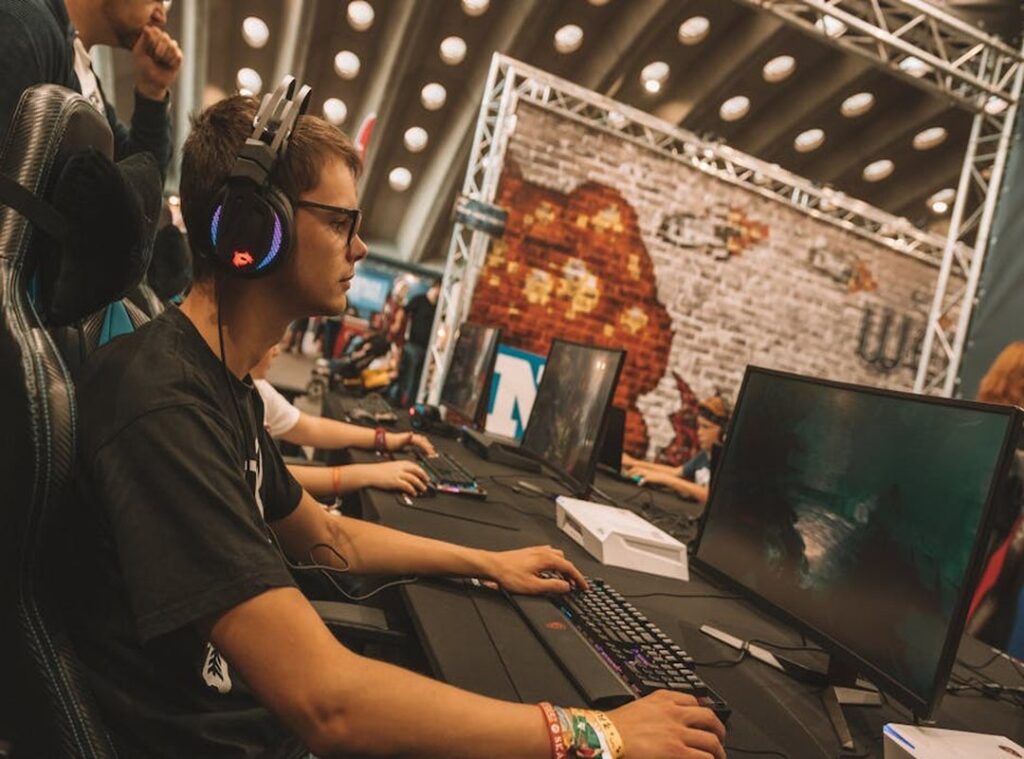
Can sitting in a chair really be a sport?
I’ve heard that one a thousand times. Usually from people who’ve never watched a pro League match or seen a Dota 2 final at the Mercedes-Benz Arena.
They’re wrong. Not just opinion-wrong. Fact-wrong.
Why Gaming Should Be a Sport Zeromaggaming isn’t up for debate anymore. Esports filled stadiums before most critics even knew the games had names.
I’ve tracked prize pools since 2014. Watched them jump from $1M to $40M in one tournament. Spoke with coaches, analysts, and players who train 10 hours a day (more) than most college athletes.
This isn’t about liking games. It’s about recognizing what sport actually requires.
No fluff. No hype. Just the evidence.
You’ll get three clear reasons. Backed by real data, not hot takes.
And yes, I’ll show you exactly where the line blurs (and where it doesn’t).
Beyond Button Mashing: It’s Not What You Think
I’ve watched pro Dota 2 team fights where players execute seven micro-decisions in under two seconds. Not seven clicks. Seven intentions, each with timing, positioning, and counterplay baked in.
That’s not reflexes. That’s real-time calculus.
My APM hovers around 140 in practice. Pros hit 300–400 (consistently.) A tennis player’s fastest serve reaction is ~250ms. A boxer’s jab evasion? ~200ms.
Top esports players process and act in under 120ms. (And no, caffeine doesn’t explain that.)
You think League of Legends is just clicking? Try being the jungler who reads three enemy rotations while managing your own camp timers, vision, and gank windows. All before minute 5.
It’s like a quarterback calling audibles mid-snap, while also adjusting his offensive line and reading the safety’s eyes (all) at once.
Map control isn’t just “taking space.” It’s denying information, forcing mistakes, and making your opponent choose between bad options. Resource management? That’s gold, mana, cooldowns, summoner spells, and mental bandwidth.
All tracked simultaneously.
Remember that Valorant site-take on Icebox last year? Where the duelist faked left, the controller blinded right, and the sentinel held angle just long enough for the initiator to peek. Then rotated before the spike planted?
That wasn’t luck. That was rehearsal, adaptation, and trust.
So why do people still ask Why Gaming Should Be a Sport Zeromaggaming?
Because they haven’t seen it up close.
Zeromaggaming breaks down those moments frame by frame. No hype. Just proof.
You don’t need to love gaming to respect the skill.
You just need to watch one round without blinking.
The Unseen Grind: What Pro Gamers Actually Do All Day
I trained with a League of Legends team for three months. Not as a player. As a writer.
But I sat in on every session.
They started at 9 a.m. Ended at 7 p.m. With two 45-minute breaks.
Not for snacks. For mobility drills and breathwork.
That’s 10 hours. Every day. Six days a week.
Some weeks hit 70 hours. You think athletes in the NFL train more? Try comparing practice logs.
Posture isn’t optional. It’s non-negotiable. One player wore a sensor vest for six weeks to correct his slouch.
His wrist pain dropped 80%. RSI isn’t rare. It’s routine.
Carpal tunnel surgeries happen. I’ve seen the scars.
I wrote more about this in What Gaming Event.
They lift. They sprint. They do yoga.
Not because they want abs. Because foggy focus costs games. A 3-second lapse in Worlds finals?
That’s a $2M loss. You don’t get that back.
Stress doesn’t just spike during matches. It lives in the prep. The sports psychologist sits with them before warm-ups.
Not after. Because mental fatigue hits faster than physical fatigue.
Nutritionists adjust meals based on tournament time zones. Trainers map sleep cycles like flight plans. This isn’t hobbyist energy.
This is Olympic-grade discipline.
So when someone says gaming isn’t a sport (ask) them how many pro tennis players do 10-hour tactical drills and deadlift 300 pounds and meditate under biometric feedback.
Why Gaming Should Be a Sport Zeromaggaming isn’t a slogan.
It’s a fact with calluses on its hands.
The Pro Space: Not a Hobby, Not a Phase
I watched a League of Legends World Championship final at the Staples Center. Sold out. 20,000 people screaming for a team that plays on laptops.
That’s not entertainment. That’s sport.
Salaried players. Full-time coaches. Data analysts who study opponent micro-movements like baseball scouts study pitch sequences.
Team managers negotiating six-figure contracts. Casters with bigger followings than local sports radio hosts.
Mercedes-Benz sponsors teams. Nike makes jerseys. Red Bull funds academies.
You think that happens for something “just a game”?
Player unions exist. Real ones. With collective bargaining agreements.
I’ve read the clauses (health) insurance, minimum wage, mandatory rest periods. Try finding that in your local chess club.
The infrastructure is built. The money is real. The stakes are higher than most minor league baseball franchises.
What gaming event is today zeromaggaming? Check it (but) don’t treat it like a novelty act.
This isn’t becoming a sport. It is one.
Why Gaming Should Be a Sport Zeromaggaming isn’t a debate anymore. It’s a fact you’re ignoring because it doesn’t fit your high school gym class definition.
Stadiums fill. Contracts hit $3 million. Broadcast deals rival NBA regional networks.
So stop asking “Is it a sport?”
Ask instead: What rules do we need to govern it properly?
Because the space is already professional. It’s already organized. It’s already here.
Esports Fans Don’t Just Watch (They) Show Up
I’ve stood in line for 90 minutes at ESL One to get a wristband. I’ve seen 30,000 people chant the same team name in unison. That’s not hype.
That’s loyalty.
Esports fans match (and) often beat (legacy) sports in raw engagement. The 2022 League of Legends World Championship hit 73.8 million peak viewers. That’s more than the 2023 NBA Finals (12.8 million) and the 2022 World Series (11.1 million).
Especially under age 35. Especially on Twitch.
You wear the jersey. You fly across time zones for a live event. You argue about meta shifts at 2 a.m. on Twitter like it’s life or death (it kind of is).
This isn’t passive consumption. It’s participation. It’s identity.
So when someone asks Why Gaming Should Be a Sport Zeromaggaming, I don’t reach for philosophy. I point to the numbers. I point to the arenas.
I point to the fact that these fans treat esports like religion. And they’re not wrong.
If you want to stay sharp on all this?
Check out How to keep up with gaming news zeromaggaming.
Gaming Isn’t Like a Sport. It Is
I used to think the same thing. That gaming was just clicking buttons.
Then I watched a pro Dota 2 draft live. Saw the hand tremors after a five-hour final. Read the physical therapy logs from an Overwatch League player.
This isn’t pretend. It’s elite skill. Real stamina.
Actual coaching staffs. Stadiums full of screaming fans.
Why Gaming Should Be a Sport Zeromaggaming. Because the evidence is already here.
You still doubt it? Fine. But don’t judge from headlines or old stereotypes.
Go watch one highlight reel from a major esports final. Just one.
See the reflexes. The fatigue. The raw, unscripted emotion.
That’s not entertainment. That’s sport.
Your skepticism ends when you see it.
So go. Click play now. Ten minutes.
That’s all it takes.

 There is a specific skill involved in explaining something clearly — one that is completely separate from actually knowing the subject. Adolphenie Reeder has both. They has spent years working with gameplay optimization hacks in a hands-on capacity, and an equal amount of time figuring out how to translate that experience into writing that people with different backgrounds can actually absorb and use.
Adolphenie tends to approach complex subjects — Gameplay Optimization Hacks, Game Industry Buzz, Competitive Hearth-Inspired Virtual Arenas being good examples — by starting with what the reader already knows, then building outward from there rather than dropping them in the deep end. It sounds like a small thing. In practice it makes a significant difference in whether someone finishes the article or abandons it halfway through. They is also good at knowing when to stop — a surprisingly underrated skill. Some writers bury useful information under so many caveats and qualifications that the point disappears. Adolphenie knows where the point is and gets there without too many detours.
The practical effect of all this is that people who read Adolphenie's work tend to come away actually capable of doing something with it. Not just vaguely informed — actually capable. For a writer working in gameplay optimization hacks, that is probably the best possible outcome, and it's the standard Adolphenie holds they's own work to.
There is a specific skill involved in explaining something clearly — one that is completely separate from actually knowing the subject. Adolphenie Reeder has both. They has spent years working with gameplay optimization hacks in a hands-on capacity, and an equal amount of time figuring out how to translate that experience into writing that people with different backgrounds can actually absorb and use.
Adolphenie tends to approach complex subjects — Gameplay Optimization Hacks, Game Industry Buzz, Competitive Hearth-Inspired Virtual Arenas being good examples — by starting with what the reader already knows, then building outward from there rather than dropping them in the deep end. It sounds like a small thing. In practice it makes a significant difference in whether someone finishes the article or abandons it halfway through. They is also good at knowing when to stop — a surprisingly underrated skill. Some writers bury useful information under so many caveats and qualifications that the point disappears. Adolphenie knows where the point is and gets there without too many detours.
The practical effect of all this is that people who read Adolphenie's work tend to come away actually capable of doing something with it. Not just vaguely informed — actually capable. For a writer working in gameplay optimization hacks, that is probably the best possible outcome, and it's the standard Adolphenie holds they's own work to.