

I’ve been playing and organizing Hearthstone tournaments for years now, and I still see the same confusion every time a new player asks where to start.
You want to compete but you’re not sure which tournaments match your skill level. Or maybe you’re trying to organize an event and can’t figure out how to categorize it so the right players show up.
The Hearthstone competitive scene has everything from casual weekend cups to massive championship events. But nobody’s laid out a clear system for understanding how they all fit together.
That’s what this guide does.
I’ll walk you through every major tournament category you’ll encounter. You’ll know exactly what each type means, who they’re designed for, and how to find (or create) the right event for your goals.
At hearthssgaming we’ve worked with tournament organizers and competitors across skill levels. We know what works and what creates confusion.
By the end of this article, you’ll have a clear framework for understanding Hearthstone’s competitive landscape. No more guessing whether an event is right for you or how to structure your own tournament listing.
Just straightforward categories that make sense.
Why Clear Categories are Essential for a Healthy Tournament Scene
Let me tell you why most tournament scenes fall apart.
It’s not bad players. It’s not even bad games.
It’s confusion.
When I first started running events at Hearthss Gaming, I watched organizers throw everyone into the same bracket and hope for the best. Beginners got crushed. Veterans got bored. Nobody came back.
Here’s what I recommend instead.
For Tournament Organizers
Start with clear hearthssgaming categories. A simple “Beginner’s Only” tag does more than three paragraphs of eligibility rules ever could.
You’ll attract the right people. Rule enforcement becomes obvious. And when you market the event, players know instantly if it’s for them.
For Players
Use categories to filter what matters to you. Skill level, time commitment, format preferences. All of it.
You want competition, not a one-sided beatdown. Categories give you that choice.
For the Community
A standardized system makes everything accessible. New players can jump in without feeling lost. Spectators can follow along without needing a decoder ring.
The bottom line? Categories aren’t just organizational tools. They’re what separates a thriving scene from one that dies out after two months.
Make them clear. Make them visible. Make them work.
Categorization by Player Skill and Competitive Level
Most people think all tournaments are the same.
They’re not.
When you’re starting out in competitive gaming, walking into the wrong tournament can be brutal. I’ve seen new players get destroyed in their first match and never come back. To avoid the harsh reality of being overwhelmed in your debut match, it’s crucial to seek out supportive communities like Hearthssgaming, where new players can learn and grow in a more welcoming environment. To help ease the transition into competitive play and find a nurturing environment, many newcomers turn to supportive communities like Hearthssgaming, where they can hone their skills and build confidence without the pressure of daunting tournaments.
The skill gap matters.
Some veterans argue that everyone should just jump into open tournaments. They say facing better players is how you improve fastest. Sink or swim.
And sure, there’s some truth there. Playing against skilled opponents teaches you things you’d never learn otherwise.
But here’s what that perspective misses.
Getting crushed repeatedly doesn’t build skill. It kills motivation. You need wins along the way to understand what’s working and what isn’t.
That’s why tournament organizers at hearthssgaming break events into skill tiers.
Open tournaments are exactly what they sound like. Anyone can enter regardless of rank. You’ll face complete beginners and seasoned players in the same bracket. These work well once you’ve got some experience under your belt.
Then you’ve got amateur and beginner leagues. These cap entry at specific ranks like Gold or below. If you’re just getting into competitive play, this is where you start. The pressure’s lower and you’re not facing someone who’s been grinding Legend rank for three years.
High-rank and Legend-only events flip the script. You need Diamond or Legend rank just to register. The competition here is serious. These often serve as qualifiers for bigger tournaments with actual prize money on the line.
At the top sit pro-level invitationals. You can’t just sign up for these. You get invited based on your track record. The prize pools are bigger and the matches get streamed to thousands of viewers.
Pick the right tier for where you are now, not where you wish you were.
The Core of Competition: Categorization by Game Format and Ruleset
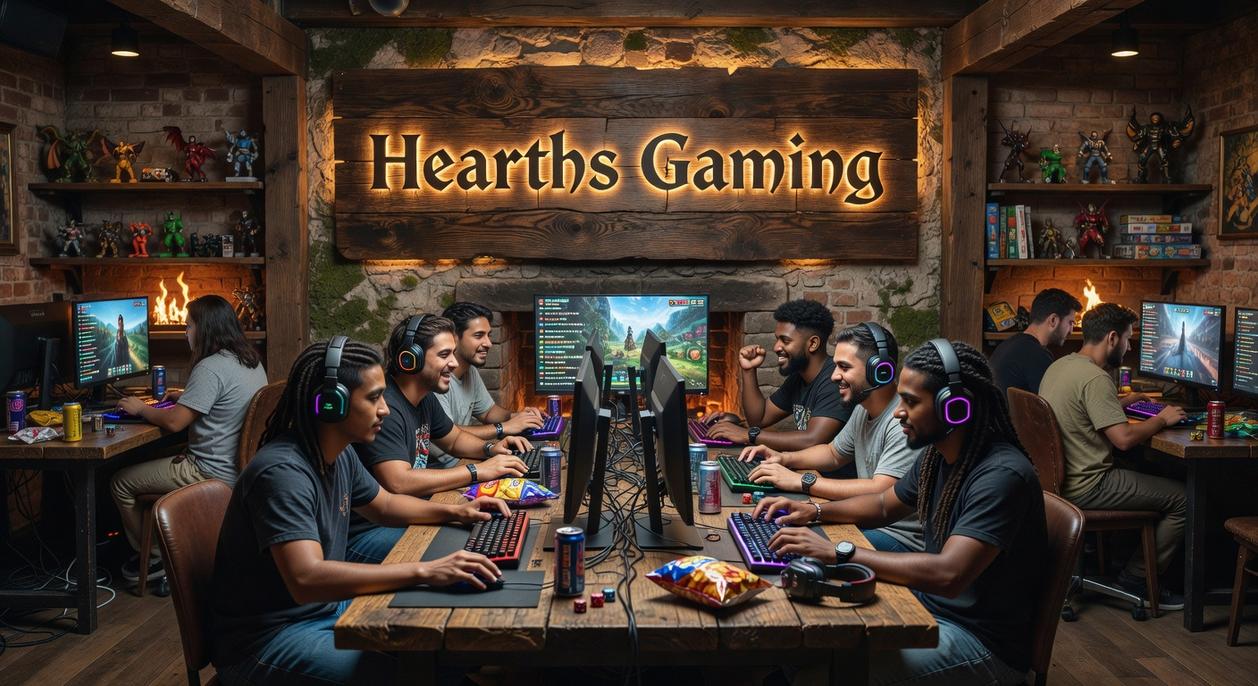
You can’t just show up to a Hearthstone tournament and play whatever you want.
Every competitive event has rules. Specific ones. And if you don’t know the format going in, you’re already behind.
Let me break down what actually matters.
Standard vs. Wild: The Foundation
Standard uses cards from recent expansions only. Wild lets you play with everything ever released.
Tournaments pick one or the other. Always. I’ve never seen a major event that doesn’t specify upfront.
Why? Because the card pools are completely different. A Standard deck won’t survive in Wild, and vice versa. According to Blizzard’s own tournament data, over 85% of official competitions run Standard format (which makes sense since that’s what most players actually know).
Some people argue Wild is more skill testing because of the deeper card pool. But here’s the reality. Standard gets picked for tournaments because it’s what the majority of the player base understands. Tournament organizers want viewers who can follow along.
Conquest: The Industry Standard
This is what you’ll see at most major events. I go into much more detail on this in Hacks Hearthssgaming.
You bring multiple decks. Each one has to be a different class. You must win with each of your decks to take the match.
Oh, and your opponent can ban one of your classes before you start.
That last part changes everything. If you bring four decks but one is clearly your strongest, guess what’s getting banned? Now you need to win with your backup plans.
The 2023 Hearthstone World Championship used Conquest format exclusively. Every single match. That tells you something about how technologies hearthssgaming has shaped competitive play.
Last Hero Standing: The Alternative
LHS flips the script.
When you win with a deck, you have to keep using it. Your opponent switches to a different deck and tries to counter you.
It rewards different skills. In Conquest, you need well rounded lineups. In LHS, you need one deck that can handle multiple matchups.
I’ve watched players dominate Conquest but struggle in LHS because they built their entire strategy around deck diversity instead of individual deck strength.
Specialty Formats Worth Knowing
Arena and Duels tournaments test drafting ability. You’re not bringing prepared decks. You’re building on the spot and adapting.
Team formats like 3v3 add a layer most players never think about. Your teammate’s picks affect your options.
Budget tournaments (sometimes called Pauper) restrict what you can build. No Legendaries, or a maximum dust cost. These events prove something important. Expensive cards don’t automatically make you better. In the world of budget tournaments, where the absence of expensive cards levels the playing field, players can greatly benefit from strategic insights found in Hearthssgaming Guides by Hearthstats to hone their skills and tactics. In the competitive arena of budget tournaments, where skill triumphs over wealth, players can find invaluable strategies and deck suggestions in Hearthssgaming Guides by Hearthstats to help them navigate the challenges posed by restricted card pools.
Categorization by Scale, Platform, and Prize Pool
You want to know where you fit in the competitive scene.
I’ll break it down. I explore the practical side of this in Strategies Hearthssgaming.
The Platform Split
Online versus LAN. That’s where everything starts.
Online events let you compete from your bedroom. No travel costs. No hotel rooms. You can play in your pajamas if you want to (I won’t judge).
LAN events are different. You’re sitting across from your opponents. The crowd’s watching. The pressure hits different when you can hear people breathing behind you.
Here’s what I think happens next. Hybrid formats are going to take over. We’ll see more tournaments that start online and finish at LAN finals. It just makes sense from a cost perspective.
Now let’s talk scale.
Community cups and weeklies are your training ground. Small prize pools or sometimes nothing at all. But these matter more than people realize. You learn to handle match pressure without risking everything.
Then you’ve got major online championships. These pull serious prize money and the best players show up. Multiple qualifier stages. Real competition at hearthssgaming level intensity.
Premier LAN events sit at the top. Gaming conventions or dedicated venues. The biggest prizes and the most prestige.
My prediction? We’re going to see prize pools get weird in the next two years. Crowdfunding and fan contributions will blur the lines between what counts as a major versus a premier event.
Some community tournaments might end up paying more than established circuits if they catch the right momentum.
The categories we use now won’t hold up forever.
Putting It All Together: A Quick Guide for Organizers & Players
You know what drives me crazy?
Scrolling through tournament listings that tell you nothing useful. No skill level. No format details. Just “Hearthstone Tournament – Sign Up Now!”
And then you join, only to get stomped by someone three ranks above you. Or you realize halfway through it’s a format you hate.
We’ve all been there.
For Organizers
Look, I get it. You’re excited about your event. But a vague title helps nobody.
Your listing needs three things: Platform, Skill Level, and Format. That’s it.
Something like “Online Amateur (Gold & Below) Standard Conquest Cup” tells players everything they need in five seconds.
Check out the hearthssgaming guides by hearthstats for more tournament setup tips.
For Players
Before you click that registration button, ask yourself three questions.
What’s my actual skill level? (Be honest here.)
Which format do I actually enjoy? Not which one you think you should play.
How much time can I really commit? A six-hour tournament on a Tuesday night might sound fun until you remember you have work the next morning. As you weigh your options on whether to join that exciting six-hour tournament hosted by Technologies Hearthssgaming, it’s crucial to consider how your commitment might clash with your responsibilities the following morning. As you weigh your options on whether to join that exciting six-hour tournament hosted by Technologies Hearthssgaming, it’s essential to strike a balance between your passion for gaming and your professional commitments.
Use these answers to filter out the wrong events. You’ll save yourself a lot of headaches.
Navigating the Competitive Arena with Confidence
You now have a complete framework for understanding Hearthstone tournament categories.
I broke it down by skill level, format, and scale because that’s what actually matters when you’re choosing where to play.
No more guessing if a tournament is right for you. No more struggling to figure out what kind of event you’re looking at or trying to create.
This standardized classification system changes that. Players can find their perfect match. Organizers can build stronger communities with people who actually want to be there.
Here’s what you should do: Use this knowledge to dive into the competitive scene. Find a local cup or an online league that fits your style.
hearthssgaming tracks these tournaments so you can see what’s available and what matches your skill level.
Your journey to becoming a champion starts with showing up to the right event.
Pick one and register today.

 Jorval Kelvayne has opinions about multiplayer experience reviews. Informed ones, backed by real experience — but opinions nonetheless, and they doesn't try to disguise them as neutral observation. They thinks a lot of what gets written about Multiplayer Experience Reviews, Game Industry Buzz, Insider Knowledge is either too cautious to be useful or too confident to be credible, and they's work tends to sit deliberately in the space between those two failure modes.
Reading Jorval's pieces, you get the sense of someone who has thought about this stuff seriously and arrived at actual conclusions — not just collected a range of perspectives and declined to pick one. That can be uncomfortable when they lands on something you disagree with. It's also why the writing is worth engaging with. Jorval isn't interested in telling people what they want to hear. They is interested in telling them what they actually thinks, with enough reasoning behind it that you can push back if you want to. That kind of intellectual honesty is rarer than it should be.
What Jorval is best at is the moment when a familiar topic reveals something unexpected — when the conventional wisdom turns out to be slightly off, or when a small shift in framing changes everything. They finds those moments consistently, which is why they's work tends to generate real discussion rather than just passive agreement.
Jorval Kelvayne has opinions about multiplayer experience reviews. Informed ones, backed by real experience — but opinions nonetheless, and they doesn't try to disguise them as neutral observation. They thinks a lot of what gets written about Multiplayer Experience Reviews, Game Industry Buzz, Insider Knowledge is either too cautious to be useful or too confident to be credible, and they's work tends to sit deliberately in the space between those two failure modes.
Reading Jorval's pieces, you get the sense of someone who has thought about this stuff seriously and arrived at actual conclusions — not just collected a range of perspectives and declined to pick one. That can be uncomfortable when they lands on something you disagree with. It's also why the writing is worth engaging with. Jorval isn't interested in telling people what they want to hear. They is interested in telling them what they actually thinks, with enough reasoning behind it that you can push back if you want to. That kind of intellectual honesty is rarer than it should be.
What Jorval is best at is the moment when a familiar topic reveals something unexpected — when the conventional wisdom turns out to be slightly off, or when a small shift in framing changes everything. They finds those moments consistently, which is why they's work tends to generate real discussion rather than just passive agreement.